

AI in construction project planning, transforming scheduling &execution
- Dec 26, 2025
- 2 min read
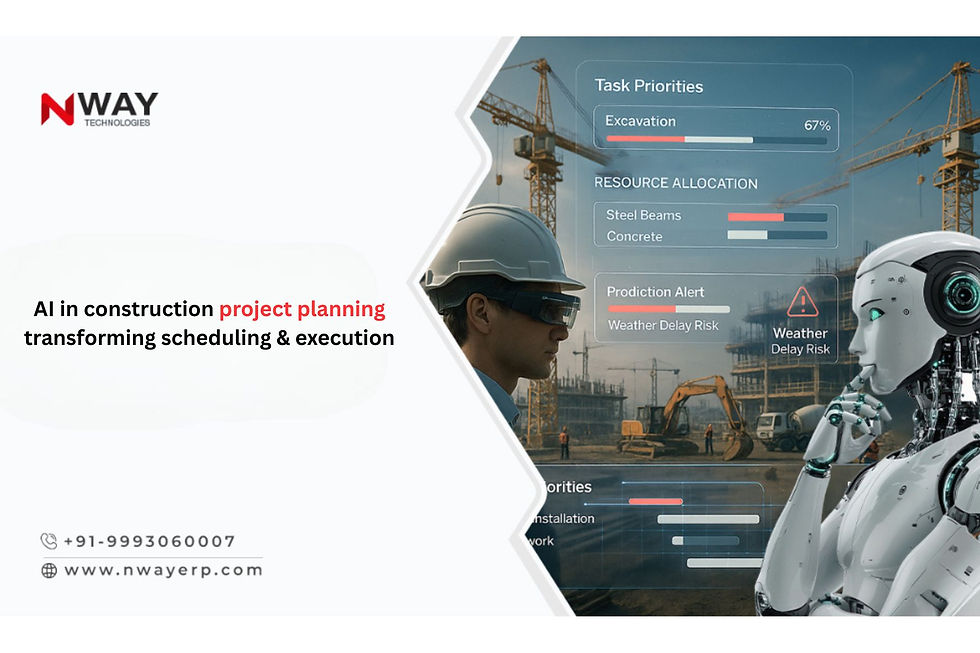
The construction industry is evolving at an unprecedented pace. With rising material costs, tight deadlines, and multiple project sites, traditional project planning methods are often insufficient. Spreadsheets and manual tools struggle to keep up with real-time project demands. This is where AI in construction project planning becomes a game-changer. By leveraging AI-powered tools, construction companies can transform scheduling and execution, making projects faster, more efficient, and cost-effective.
Why Traditional Construction Planning Fails
Traditional project planning faces several challenges:
Static Scheduling: Plans are rigid and fail to adapt to real-time changes.
Poor Coordination: Managing labor, equipment, and materials is often inefficient.
Fragmented Data: Disconnected spreadsheets and tools reduce visibility.
Reactive Management: Problems are addressed only after delays occur.
These issues lead to project delays, increased costs, and rework. In this context, AI in construction project planning becomes essential to modernize scheduling and execution.
How AI Transforms Scheduling & Execution
1. Dynamic and Smart Scheduling
AI-powered planning tools analyze multiple variables, such as labor availability, material delivery timelines, equipment readiness, and site conditions.When a delay or change occurs, AI can automatically re-optimize schedules, minimizing idle time and preventing cascading project delays.
2. Predictive Forecasting
By studying past project data and current progress, AI predicts future delays, potential cost overruns, and resource shortages.Project managers receive early alerts, enabling proactive decision-making instead of reactive firefighting.
3. Real-Time Resource Optimization
AI ensures optimal use of resources:
Proper utilization of labor and equipment
Prevention of material shortages or over-ordering
Efficient allocation of resources
This real-time optimization is a key advantage of AI in construction project planning, helping projects stay on schedule and budget.
4. Reduced Rework and Material Waste
Better forecasting and tracking reduce errors and minimize material waste.By decreasing rework, AI saves time, cuts costs, and improves overall project efficiency.
5. Faster and Data-Driven Decision Making
AI integrates data from procurement, finance, labor, and site progress into a single dashboard, enabling managers to make faster, informed, and strategic decisions.
Benefits of AI in Construction Project Planning
Adaptive and smarter scheduling
Reduced project delays
Less rework and material waste
Accurate cost estimation
Improved coordination among teams
Proactive risk management
By implementing AI, construction companies can transform scheduling and execution, achieving better performance and efficiency.
Conclusion
AI in construction project planning is revolutionizing how projects are scheduled and executed. Companies adopting AI-powered solutions can:
Deliver projects on time
Control costs efficiently
Reduce rework and waste
Improve overall operational efficiency
In today’s competitive landscape, firms that integrate AI-driven planning and scheduling gain a significant advantage, ensuring successful project delivery and higher profitability.


Comments